

VISITING HOURS:
Week Days - 9 am to 8 pmSundays - Only Emergency Cases

How to Prevent Teeth from Shifting After Invisalign?
So, you have opted for the Invisalign treatment and find your teeth straight and your smile amazing. But how would you maintain the results? How to prevent the teeth from shifting after Invisalign? Post-treatment care is essential to preserve that perfect alignment and avoid undoing all the hard work you and your orthodontist put in.
In this blog, we’ll walk you through simple, proven steps to keep your teeth straight, preventing teeth shifting back after Invisalign, so your smile stays exactly how you like it.
Why Do Teeth Shift After Invisalign?
Even with the aligners in place, your teeth may shift if you do not manage them properly. This type of condition is called orthodontic relapse. Let's continue with a little bit of information on how teeth "remember" their position. The ligaments need time to adjust to the new positions. Some reasons that can cause the teeth to shift after Invisalign include:
Not wearing your retainers consistently
Natural ageing
Teeth grinding (bruxism)
Gum disease or bone loss
Missing teeth cause adjacent teeth to move
How To Keep Your Teeth From Moving After Invisalign?
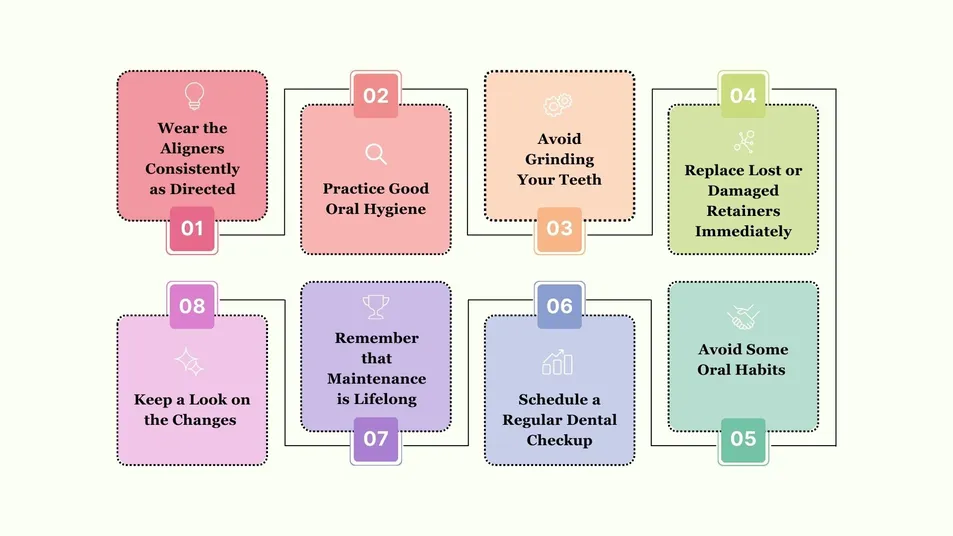
Now that we know what causes the teeth to shift after Invisalign, here are a few ways that can help you prevent it :
1. Wear the Aligners Consistently as Directed
Follow the suggestions and guidance from your orthodontist. During the initial days, you are expected to wear them for at least 20 to 22 hours a day. After a few months, you can switch to less frequent wear.
If you skip this step or even just forget about the retainer for a day or two, the teeth may shift, especially within the first year since your treatment.
Pro tip: Use a reminder app or set a daily alarm to remain consistent in your retainer routine.
2. Practice Good Oral Hygiene
It is equally important to keep your teeth and gums healthy. This method is highly essential for keeping the teeth aligned. Gum diseases and tooth decay can cause the retainers to lose their effect.
A few tips here can include:
Brush twice a day
Floss daily
Use mouthwash to reduce plaque and bacteria
Visit your dentist for regular cleanings
Reminder – A healthy mouth is a stable mouth. Protect your investment by maintaining excellent oral hygiene.
3. Avoid Grinding Your Teeth
Some of us tend to grind our teeth at night. This condition is called Bruxism. It can put a lot of unwanted pressure on your teeth and can result in an unwanted shift. If tooth grinding is a problem for you, a dentist should answer all the queries you may have.
Your dentist may be recommend:
A nightguard (different from a retainer)
Stress reduction techniques
Adjustments to your bite if misalignment persists
Wearing a custom nightguard can protect your teeth and help maintain your post-Invisalign alignment.
Also Read: Things Parents Should Know About Choosing Invisalign for Teens
4. Replace Lost or Damaged Retainers Immediately
Let us face it. You can cause the retainers to fall out, get broken or even chewed up by your pet. If it happens to you, immediately contact your orthodontist. They may help you obtain an alternative, too.
The longer you go without wearing a retainer, the more likely your teeth will begin to shift back to their old positions. Keeping an extra set of retainers (if your provider allows) is a smart backup plan.
5. Avoid Some Oral Habits
Bad oral habits can be a concern and can negatively impact the health of your Invisalign aligners. These habits can inadvertently push or shift your teeth when using Invisalign aligners.
Some of these habits can include:
Avoid nail biting as it can put unwanted pressure on the front teeth.
Never chew on hard objects. Some examples can include pens, ice, etc. These habits cause the teeth to shift their position.
Never use your teeth as an opener or for similar purposes. It can impact the position of your teeth.
6. Schedule a Regular Dental Checkup
Never stop your visits to the orthodontist just because your aligners have been placed. It will maintain the relationship for timely propping and a follow-up. This will help monitor your retention and check for any signs of shifting.
You should seek an extra meeting and appointment in the following cases –
Tightness when putting in your retainer
Spaces forming between teeth
Crookedness returning
Keeping in consistent touch with your orthodontist should help you get access to every sort of assistance whenever you need it.
7. Remember that Maintenance is Lifelong
Remember that aligners are for life. It is important to maintain them properly. You will need to wear them 24 x 7. So, it is very essential to incorporate them as part of your nightly routine.
Think of it like this: you wouldn’t skip brushing your teeth and expect them to stay clean. Similarly, skipping your nighttime retainers can lead to changes in your alignment over time.
Also Read: How Long Does Invisalign Take to Straighten Your Teeth?
8. Keep a Look on the Changes
Be aware of any of the changes that your teeth may experience. This can be an indication of a movement of your teeth. You may notice a few subtle changes. In case you do, immediately inform the orthodontist.
Some of these signs that you need to take care would include:
Your retainer feels tight
A slight gap reappears
Your bite feels “off”
Tip - Those are signs your teeth may be shifting. Don’t ignore these signals—schedule a consultation to adjust your treatment or create a new retention plan.
Conclusion
After months or even years of Invisalign treatment, the last thing you want is to see your teeth shift out of place. Opt for consistent retainer use, proper oral hygiene, and regular dental visits. So, with these efforts, the orthodontic treatment could become an investment-worthy endeavor to enjoy a smile for life.
Straight teeth aren’t just a phase. They’re a lifelong commitment. But given the appropriate habits and tools, that commitment should be easy, stress-free, and worth every dime. We at Dentique Dental Studio help you achieve the best standards in terms of proper care of your Invisalign aligners and help you prevent the shifting of your teeth.
For more assistance and guidance, get in touch with us.
OUR
TREATMENTS
TREATMENTS


6ab6604bb7d17.webp)









6aba331adb684.webp)