
VISITING HOURS:
Week Days - 9 am to 8 pmSundays - Only Emergency Cases
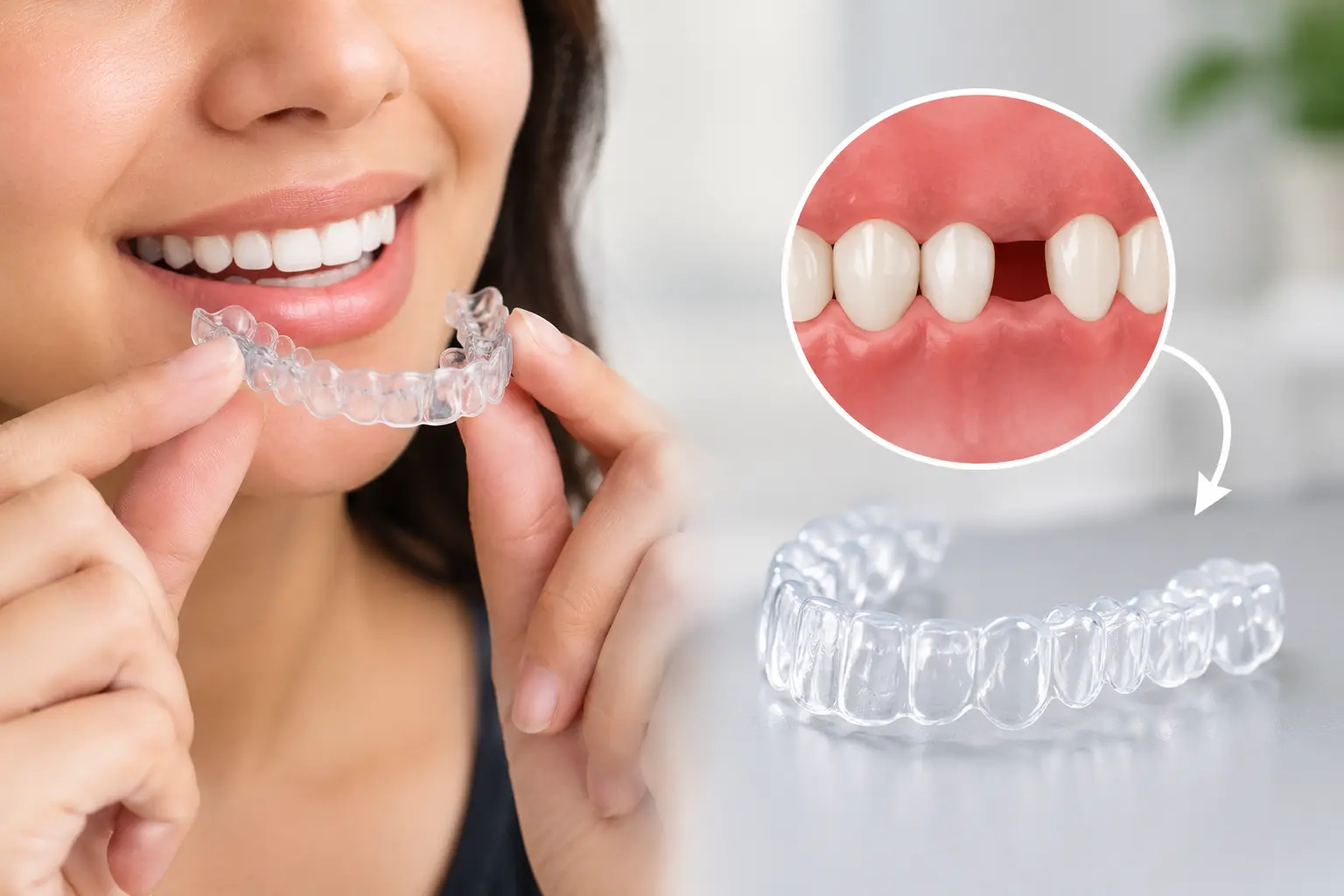
Is Invisalign Effective If You Have Missing Teeth?
Missing a tooth does not automatically rule out Invisalign treatment, though it does change how we plan it. Whether a gap can be closed, kept open for an implant, or needs other care first depends on where the tooth is missing, how many are missing, and the condition of the teeth and gums around it. Some gaps move other teeth and cause problems over time, and some gaps remain stable for years without causing problems. Where the gap sits, how long it has existed, and the condition of the teeth and gums around it together shape the plan.
Does Missing a Tooth Rule Out Invisalign Treatment?
Yes, but the suitability of Invisalign depends on how the missing tooth has affected the surrounding teeth, your bite, and the health of your gums and supporting bone. We also need to know whether your goal is to close the space or prepare it for a future replacement.
A single missing premolar requires a different approach than three or four gaps spread across both arches, and the condition of your gums and jawbone can matter just as much as the gap itself. One of the more common starting places we find is a lost tooth, not an unusual exception.
How Do Missing Teeth Affect Treatment Planning?
If you lose a tooth, the teeth next to it don’t just stay where they are. Neighbouring teeth tilt into the space, opposing teeth can over-erupt into the gap, and your bite gradually loses stability. This shifting pattern is exactly what we map out before deciding how aligners should move your remaining teeth.
- Tilting teeth next to the gap often need to be guided back before we can address the gap.
- Over-eruption from the opposing arch is common in long-standing gaps and complicates bite alignment.
- Bone condition at the gap site becomes particularly relevant if an implant is planned, alongside the bite and the position of surrounding teeth.
- Multiple gaps across the mouth will need a full-arch plan instead of specific corrections.
Can Invisalign Close Gaps Left by Missing Teeth?
Invisalign can be used to fix specific gaps by moving the neighbouring teeth closer together, but that’s not always the best option. Closing a gap works best when the remaining teeth are healthy, the bite stays balanced afterward, and the result does not compromise your smile or chewing function.
- Front tooth gaps need more care, since closing them shifts visible spacing and your midline.
- Partial movement can narrow a gap enough for a smaller, more natural-looking restoration to fill the rest.
- Whether a posterior gap can be closed will depend on the tooth missing, the position of the surrounding teeth, and your overall bite.
Can Invisalign Prepare Space for a Dental Implant?
Invisalign is generally used before a dental implant is set, not instead of it. If your teeth have drifted into that gap over time, aligners can gently pull them back into place, opening up enough room for the implant, and have your bite lined up properly before the implant is installed.
- Implants cannot be moved once placed, so orthodontic work typically comes first.
- Aligners can widen a gap narrowed by years of drift, restoring room for a standard-sized implant.
- In some cases, a temporary cosmetic tooth can be built into the aligner to make the gap less noticeable during treatment.
- The coordination of your orthodontist and implant dentist ensures that timing and spacing are maintained before surgery.
Will You Need Other Dental Treatments Alongside Invisalign?
Invisalign can move teeth to close or adjust a gap, but it does not put a new tooth in place of a missing one. Depending on your case, you may still need a dental implant, bridge, or partial denture once your teeth are aligned, and any active gum disease needs treatment before aligners can work safely.
- Active gum disease needs to be controlled before orthodontic movement can begin safely.
- Bone grafting may be needed if the implant site has narrowed too much over the years.
- A crown, bridge, or implant usually follows once your teeth have settled into their final positions.
- Retainers are necessary afterward regardless of whether a restoration is planned.
What Do We Check Before Starting Invisalign?
Before we recommend Invisalign, we examine the missing spaces, remaining teeth, gums, supporting bone, and bite to understand what treatment will achieve. Choosing a dental clinic in Kochi, Kerala, with the right orthodontic and dental expertise is important when your treatment may involve more than aligners alone.
- A digital scan maps your current tooth positions and plans the movement your aligners will follow.
- X-rays or CBCT imaging are brought in when bone density or root position needs a closer look, which a scan alone cannot show.
- We assess the health of your gums and supporting tissues before planning tooth movement.
- Your bite and jaw alignment are assessed alongside the gap itself, because changes in one often affect the other.
How Dentique Approaches Invisalign With Missing Teeth
If you are considering Invisalign dental treatment Kochi providers offer an assessment that can clarify whether your missing tooth should be replaced, the space closed, or preserved for a future restoration. At Dentique, Invisalign planning is overseen by Dr Sampreeth Mathew. With more than 23 years in clinical practice and Platinum Elite Invisalign Provider status, he brings extensive orthodontic experience to cases involving alignment, spacing, and missing teeth.
If you are comparing dental hospitals in Kochi for complicated orthodontic situations, it helps to ask whether different areas of dental care can be integrated into one treatment plan. At Dentique, our team includes periodontists, prosthodontists, and endodontists, allowing us to coordinate related care when a missing tooth or other dental concern requires more than orthodontic treatment alone. Contact Dentique The Dental Studio to discuss your dental concerns and arrange a consultation to understand the treatment options suited to your needs.
Common Questions About Invisalign With Missing Teeth
Can Invisalign work if I am missing a back tooth?
It often can, though this depends on where the tooth is missing, the condition of the surrounding teeth, and your overall bite. A single missing molar does not usually prevent treatment. Missing several back teeth can make tooth movement more complex because there are fewer stable teeth to work around and support the planned movements.
Can I close the gap instead of replacing the tooth?
Sometimes, yes. If the teeth around the gap are healthy and moving them together still gives you a stable bite and a natural-looking smile, closing the space can be the better choice. We decide this only after looking closely at the surrounding teeth and your bite.
Can I get an implant after Invisalign?
Yes. In many cases, we use Invisalign first to move the surrounding teeth into position and create or hold the space an implant will need. The right timing depends on your treatment plan, and we coordinate it closely with the implant stage.
How long does treatment take with missing teeth?
This varies from case to case. How many teeth are missing, where they are, how much the surrounding teeth have shifted, your bite, and whether we need to prepare space for a future implant all play a part in the timeline.
OUR
TREATMENTS
TREATMENTS
6ab6604bb7d17.webp)









6aba331adb684.webp)